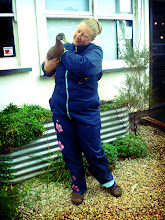
The story so far

Tamara left Bunyip in April 2009 seeking what she needed to know for her permaculture future. She spent 9 months at her Aunt Catherine's farm in Arid South Australia, then 9 months at Bill and Lisa Mollison's farm in Tasmania. Now she's off on more adventures starting Moonrise School of Permaculture and teaching Permaculture Design Courses in the beautiful Dandenong Ranges near Melbourne. Ducky is there for the journey...

Friday, January 3, 2014

Ducky gets to know his mum

Guess who turns 9 this week???

Here he is at 3 weeks old, and we've been together ever since :)

Thursday, October 3, 2013

The politics of weeds as a food - and a recipe!


The politics of weeds as a food

Its spring and all the weeds are coming up. Awesome! Time to make some salad!!! I have some theories on herbs and edible weeds. The first is that many of these plants have been part of the human landscape for thousands, even millions of years. It’s no accident that Dandelion, one of the most nutritious plants in the world is found in temperate climates all over the globe. 

It's there because we have been eating it forever, we took it there. Where we call it a weed, it has fallen victim to poison companies and people who have been convinced by Monsanto, Bayer and the like that lawns should be a monoculture, that they should have no food value whatsoever and that we need to poison the hell out of anything other than grass. This is important – if we have food volounteering in our lawns we are less likely to buy vegetable and grain seed and food produced by these same companies.  God forbid we have any say over what we eat, and any food democracy at all.

When we eat a dandelion leaf, we aren’t just getting Vitamin A, B, C, D, fibre, protein, iron, calcium, magnesium, potassium, phosphorus, copper, cobalt, zinc, boron, molybdenum, we are telling multinational corporations to shove their poison and GMO seed where the sun don’t shine.  We are also saying a big up yours to companies like McDonalds who would squash our food independence in the name of money making and deliberate homogenization.

I’m a permaculture designer – one of our principles of design is this:
The problem is the solution.
Where someone else sees a problem and wants to kill it, have a think about how that plant could be utilized. Find out what ecological niche and function it fills and exploit it. Use it for food, or firewood, or basketry, or medicine, or animal forage, or to advance succession.  Once we have figured out how to use it, it is no longer a weed, but an ally. But now, on to the food…

Getting started with eating herbs and weeds can be challenging as many of us haven’t worked with their flavours before. Making a green dressing for your salad, boiled potatoes or meat is a great way to get extra nutrition as well as awesome flavour. I’ve put the ingredients below in ratios to help you make a delicious mix. The trick is to use as many different herbs and weeds as possible, chopped very finely, so that there is no one overpowering flavour. I’ve put down the plants I have tasted and like. There are lots more out there – get researching and foraging! Get your plant ID correct so you don’t get nasty surprises like eating broad leaf plantain instead of narrow leaf plantain – or too much dock - it aint fun, trust me.

And remember – every delicious bite is a political act of independence!


Green Salad Dressing
You can chop any of the ingredients finely and hand mix or use a blender to get a pesto-like consistency with garlic and olive oil.
Add lemon or lime juice to balance the flavour. You can also use good vinegar and a teaspoon of mustard. Then add salt and pepper to taste. Try adding some nuts or capers for extra body.
Be creative and remember to taste as you go and before you season. 

Choose some of these ingredients:

Handful
parsley, broad bean tips, kale, oregano or marjoram, young silverbeet, young rainbow chard, beetroot leaves, basil, coriander, watercress, sprouts, mint, clover leaves, chickweed, mallow, thin leafed plantain (small leaves)

Half handful
sage, thyme, raw sorrel, spring onions, chives or garlic chives, rosemary, chervil, tarragon, borage, lemon balm, nasturtium leaves, mustard leaves, dill, fennel, young dandelion leaves (before flowering), violet leaves, catsear, small fat hen leaves,  purslane, onion weed (allium triquetrum)

Handful blanched
warrigal greens, spinach, silverbeet leaves, nettle leaves and stems, sorrel, amaranth, large fat hen leaves, blanched canna lily (new shoots peeled to green centre)

Pull apart
edible flowers for garnish, Dandelion, Borage, Nasturtium, Calendula, Bergamot, Clover, Rocket, Allium, Pineapple sage, any Brassica flowers

Other weeds I've eaten:

Prickly pear - use caution when harvesting... TRUST ME!!!

Buds of Tree Mallow

Edible weed!

Tuesday, June 18, 2013

Free Edible Forest Garden workshops - Upwey 20th and 21st of July


In return for the sponsorship and support of Permaculture Melbourne and people of the Upwey community to enable me to attend Dave Jacke's Edible Forest Garden Intensive at Milkwood Permaculture I am offering free workshops.  

Two day workshop in Upwey on the 20th and 21st of July

Saturday 20th 10am to 5pm
Sunday 21st 11.45 to 5pm  

We will start following Permaculture breakfast at Magpie Cafe - 10.30 to 11.30am.
Location is to be announced. 
You must be an "Upwey or surrounds" local to attend this workshop.
Please contact me for info or registration: Tamara@moonrisepermaculture.com.au

If you can't make these dates please contact me anyway and I will let you know when I am running these workshops for other groups. All Upwey and surrounds people will be free. If the response is too large I will run another lot of workshops later in the year. 

Texts: "Edible Forest Gardens" Volume One and Two by Dave Jacke
If you have these books please bring them. My volumes will be available on the day. You can probably share someone's book if you don't have a copy. The cheapest place for these books is Amazon or you can purchase them from Dave Jacke direct at: http://www.edibleforestgardens.com/about_book 

Two Day workshop: Theory and Implementation

Theory:
  • Permaculture, Ecology and Forest mimics

  • Understanding forest dynamics and succession

  • Resource sharing guilds

  • Mutual support guilds

  • Edible Forest Garden Pattern Language

  • Site Analysis and Assessment

  • Edible Forest Garden design basics 

  • Patch Design using the matrices in Volume 2 of "Edible Forest Gardens"

  • Coppice crops

  • How Australian EFGs must differ from examples in the UK and USA


Action: 
  • Implement an Edible Forest Garden design at a public place in Upwey with donated plants (please let me know if you would like to donate plants by 15th July so I can design them in)
 

These are the first of many forest garden workshops in Upwey. These classes will well and truly get you started, but as people get acquainted with Forest Gardening and have specific areas of interest I can run more workshops and possibly an EFG book reading club.

Read how Dave Jacke explains forest gardens here:

Make sure you check out Angelo Eliades' Melbourne demonstration EFG at his website:
Angelo has created a huge resource for budding permaculturists and Forest Gardeners. 
Angelo runs excellent tours of his garden and speaks eloquently about it and many other topics. 

Other upcoming courses: 

  • Introduction to Edible Forest Gardening at "Upwey Townies" Monday 15th July from 6pm, Upwey Township Hall
  • Permaculture Design Course (PDC) with Tamara Griffiths and Taj "The Perma Pixie" runs Wednesday evenings from 10th July until December email Taj: thepermapixie@gmail.com 
  • Permaculture Design Intensive, this post-PDC course runs 5 weeks, October and November
  • register your interest with Taj: thepermapixie@gmail.com 
  • Understanding and improving soil with Taj "The Perma Pixie" August and September email Taj: thepermapixie@gmail.com
  • Spring Wildfoods workshop with Taj "The Perma Pixie" Sunday 6th October, Thornbury email Taj: thepermapixie@gmail.com 

Tamara Griffiths
Moonrise Permaculture
Tamara@moonrisepermaculture.com.au
0407 45 7707

Wednesday, June 12, 2013

Fruit trees in temperate Edible Forest Gardens


The temperate Edible Forest Garden (EFG) movement began in the UK with Robert Hart. Even though some think he made ‘every mistake in the book’ it still fed him and his brother with leftovers for locals over many years. A forest garden is such a highly productive system that even first attempts at the idea created an abundance of food. Robert wrote several books on forest gardening as well as ecology. His best known work is "Forest Gardening". 

Patrick Whitefield built on Hart’s idea and his book “How to make a Forest Garden” was one of my first permaculture books. It inspired me to turn three plum trees with grass under them into a forest garden that I ate out of daily. 

When I came across Dave Jacke’s double volumed "Edible Forest Gardens" (with Eric Toensmeier) I was overwhelmed by the sheer amount of information and dipped in and out of them until I did Dave's course recently at Milkwood Permaculture. Over many years of design and implementation of edible forest gardens, with the largest project to date at Wellesley College in Massechusetts, the tomes have much to share. His course re-introduced me to the appendices at the back of volume 2 – with many tables on plant use, how they work in forest garden guilds, and a huge amount of useful information for people growing fruit trees.

Also of use for fruit tree growers are two ways Dave uses guilds – the ‘resource partitioning guild’ and the ‘mutual support guild’. EFGs are a mimic of a forest. As permaculturists we recognise that forests have at least three vegetation layers above the ground. These layers partition the light coming into the system. Fruit trees are often the overstory in a mixed orchard, but they can be a middle story growing near to but not under other larger food trees like oaks and chestnuts, for example in a ‘forest edge’ type pattern. 

In EFGs we must also be aware that a resource partitioning guild also takes the underground economy into account, with soil moisture and nutrients also being shared with other plants. When we look at fruit trees in our systems we must look at their root structure and tolerances as well as their above ground habits. This tells us the best way to work with the physical structures when choosing the plants in our EFG and how we work with succession.

When we create guilds around our heavily cropping fruit trees it is also important to create a mutual support guild. What plants and animals aid our fruit trees varies with each species, root stock and cultivar and requires a detailed needs analysis for each variation. The pear is an example that Dave Jacke uses; European Pears need calcium, and growing an understory of comfrey that bio-accumulates calcium is a good pairing for around its roots. This guild with more suitable plants can be seen above, from the cover of Dave Jacke’s Edible forest garden books. A full size pic is at Milkwood’s blog: http://milkwood.net/2011/11/18/gardening-like-a-forest-podcast-with-dave-jacke/

In our mutual support guilds we can also create year round nectar availability for bees and specialist feeders like hoverflies and give these important pollinators and predator species habitat and fodder and increase our fruit tree yields. Plants like yarrow with many functions as a nectarary, dynamic accumulator and living much plant are excellent additions to forest gardens.

The Wellesley EFG project can be found here:

This article was originally written for the Permaculture Melbourne Newsletter - "Permaculture Information Exchange" or "PIE". This edition has pages of excellent info on fruit trees - you can join Permaculture Melbourne for access to this amazing resource. There is so much more for me to write on my learning from Dave Jacke - but I do recommend people get the books I've mentioned above and give forest gardening a go. And let me know how you're going or if you need some advice!

I have lots of pics of my forest gardens at http://www.flickr.com/photos/boodicusducky/sets/72157625608069701/
and implementation of the Heritage fruit orchard/forest garden at

Tuesday, June 4, 2013

A Permaculture Winter in Belgrave - with Ducks!

Its hard to believe that my last post was written in January!! What a slack blogger I have been. But I haven't been doing nothing - Taj and I have been teaching two Permaculture Design Certificates (the 72 hour internationally recognised course abbreviated to PDC), I've been back in the Stephanie Alexander Kitchen Garden at the Aspendale Gardens Primary School and I've studied hard at the Edible Forest Garden with Dave Jacke course at Milkwood Permaculture!

Its winter and in true permaculture style I am sitting outdoors at my little coffee table enjoying the cloudy daylight. The ducks - yes ducks as in plural - Ducky has some new friends - two lady ducks called Boodicca and Drusticc - have just found the lush grass around the grey water outlet for the house - which needs some designing done to clean and reuse it. We are thinking maybe bathtubs with reed beds leading to a duck/prawn growing system near the water tank green house... none of which exist at this stage, but as ideas we are enjoying the thoughts!

The ducks have just started to lay eggs, this morning I got eggs 7 and 8 and so far they've all gone to the house upstairs - my permaculture community that lives 2 minutes away from my nice private little studio. I have a view of the acre or so of the land we have here. It is glorious to see Ducky and two white pekins in the lush green landscape searching for goodies; very picturesque with the Crimson Rosella adults and juveniles nibbling seed on the swale.

Where to start! The previous post is about starting the Wednesday night PDC and advertising the upcoming saturday PDC. Well the saturday course finished last weekend with some brilliant permaculture designs presented by the four awesome graduates. We were super impressed with the designs, and astonished at the level of effort and research that had gone into them. Where people had done patch designs, they had taken the forest garden technique of resource partitioning guilds and had researched not only the needs of fruit, vegies and vines, but also their root structures so sun and soil space was shared. I could have been knocked over with a feather!!!

It was a little sad to say goodbye to the class; over the last few months we've spent many days together learning and designing but it felt awesome to unleash some more permies on an unsuspecting world. The PDC is supposed to be transformational and I am pretty sure this one was. For Taj and myself as well. This was Taj's first PDC and only my fourth so it was a huge achievement for both of us. Taj is also the queen of admin, organisation and class resources - you can see some of her notes and at her blog: http://thepermapixie.blogspot.com.au/

What else is happening? The Wednesday night class from my last blog has been going for nearly 6 months and many evenings and dinners have been shared. There comes a point in a course where people have gotten to know each other and it becomes a night out with friends as well as a learning experience. The communal meals each week have been part of that - sharing food that you have made with people creates bonds that you just don't get in situations without food. Food is a fundamental part of our culture as humans, we've been sharing food and fire for millennia. This class finishes in the next few weeks and the permaculture family we've built will stop meeting weekly - hopefully people will visit me at Permaculture Breakfast at Magpie Cafe in Upwey. Some of the students are refusing to stop coming... they may be helping with the next course and possibly teaching on it, so we'll see.

And now to tell you about the next PDC course! It starts on Wednesday July 10 and runs for 6 months. We are starting at almost mid-winter and will travel with the sun as spring and summer return. Here is the write up:


July 10 2013 Permaculture Design Certificate
Join The Perma Pixie and Tamara Griffiths this winter as we snuggle up next to the combustion stove with tea constantly brewing and share our knowledge and experience about the wonderful world of Permaculture!
The course will run through spring and into summer, when we will start to put our winter lessons into practice and get our hands dirty!
Permaculture was what lead us to believe we can make a positive change in our world, helping to heal the environment, bring ecology back to a healthy equilibrium and give ourselves an inherent sense of well-being through this work. We hope others will find the same sense of connection to their surrounds and empowerment within themselves through our courses. 


A full 72 hr PDC which aims to empower and inspire students to continue their lives with a sustainable and conscious outlook.
Topics covered include:
- Permaculture Principles and Ethics
- Ecology
- Patterns in Nature
- Methods of Design
- Water
- Soils
- Animal Systems
- Community and Social Permaculture
- Forests and Plants
- Wild Foods and Herbal Medicine skillday
- Food Forests

The course is Wednesday evenings for 3 hrs from 6:00pm - 9:30pm, and runs for the duration of 6 months. This is to accommodate for peoples busy lives and ensure that we keep warm by the heat of the combustion stove for the winter evenings while we learn some theory, before stepping out and getting our hands dirty in spring!

Cost: $700 waged, $500 concession
Payment plans available - talk to us

Join Tamara Griffiths and Taj Scicluna (The Perma Pixie) as we continue our journey to revolutionize the world through Permaculture.
For more info check my website:www.thepermapixie.com
For bookings: thepermapixe@gmail.com 
More info from me: Tamara@moonrisepermaculture.com.au


Tamara and Taj at the recent PDC excursion!

Monday, January 28, 2013

Taj and Tamara's first Permaculture Design Certificate has started!

Hi Everyone!

I am mega excited to tell you that teaching has started on Taj and my first ever joint Permaculture Design Certificate!!! We are doing a weekly Wednesday evening PDC!

Taj and I started the course on the 16th of January, with everyone sitting outside on rugs I gleaned from  hard rubbish! We are teaching from our amazing home in Belgrave, where we are settling into after moving here late last year. We had shade for the most part on this warm evening as we introduced ourselves using Robin Clayfied's process called "Symbol of Passion".

We put out all our textas, pencils and pastels and each person has a piece of (recycled) paper and writes their name, has a symbol that represents them and pictures or words of what we are passionate about. Then we tell the group about what we've drawn. I love this process, I find it an awesome way to cut to the essence of someone - and it helps us teachers know the interests, backgrounds and learning styles of our students. It is also an opportunity to see if people shy or outgoing and adjust our teaching methods accordingly. This group is very musical - we might have some permaculture songs coming out of this lot!

It is also very diverse with two young women who have just left year 12 through to a woman in her fifties who visited one of permaculture's best example of urban food growing throughout Cuba last year (see the documentary "The Power of Community"). We have one young man, who studied horticulture with Pete the Permie (read this as permaculture!) and is a great asset to the class. Others in the class have been involved with sustainability (real sustainability not the greenwash crap) for many years and are active in their community. I can tell it's going to be a great 6 months.

After our introductions - Ducky met everyone too - we shared a meal around our huge dining table. Everyone brought food to share, some homegrown, some wildcrafted, some organic, some conventional, some from the biodynamic store in Kallista, some from the supermarket. I mention this because some people asked me if it was alright if they could bring food from a shop as they were worried it would be frowned upon. Our reply was - look, no one can live up to the expectations of what the permaculture life "should" be. We can do our best under our circumstances and ease up on the judgement of ourselves and others. This is part of the fourth ethic of permaculture the Gaiacraft team use: Transition Ethic (more on this later).

Dinner was fabulous, so much wonderful food and a buzz of conversation. Taj's basil pesto was a standout for me! I pay attention to how people are engaging with each other and the subject matter at break times to gauge how they are going with the learning, and possible changes needed with teaching style or processes. I love it when people are so enraptured with their discussions that it is hard to get them to come back to a structured class (until I have to ask them three times!!!!).

The next topic was

"What is permaculture"

We used a simple brainstorm - Taj leading the session with me being the scribe - we used the "popcorn" method (again thanks to Robin Clayfield) of having turns to speak - often easier than going around in a circle (it depends on the topic and group). Once everyone had a go Taj and I gave a few quotes and examples of what permaculture is: we use our own sources and the worksheet "Defining Permaculture" from the Gaiacraft workbook. I like to define permaculture as a way of thinking and designing our lives, communities, homes and food growing systems in an ecosystemic way - everything is connected and we find ways to make our problems our solutions.

See the entire workbook at this link - it is awesome!!!
All of our students get one of these is soft cover as part of their course fee!
http://www.gaiacraft.com/gaiacraft-workbook/

It is a great joy teaching with Taj again, we sit next to each other, bouncing off each other and giving the other the support to hold space for creative facilitation of learning. I missed Taj so much while she was away in Europe, and when we taught together again I remembered why - we totally rock!

So - thoroughly enjoying ourselves we launched into

Permaculture Ethics:

Care of the Earth
Care of People
Limit our consumption and share the surplus
And the fourth ethic the Gaiacraft team use - Transition. The quote below is taken from the gaiacraft  workbook:

Often people feel overwhelmed by the ethical implications of permaculture or the idea that they must make radical changes all at once. This ethic helps people transition into a permaculture consciousness and dissolves the judgemental attitude that can come along with some permaculture perspectives, making people feel more comfortable to learn about permaculture without being judged or overwhelmed. 
To introduce these ethics we used the Gaiacraft Permaculture Principles deck - a wonderful resource for teachers. Have a look at them on my facebook photos page: https://www.facebook.com/tamara.griffiths/photos


These cards have several levels. First is the ethics, second is the principles, third is strategies and fourth is techniques. Passing around only the four ethics cards Taj and I introduced them and facilitated a short discussion on each one. Then we passed each ethic card around and people made a statement about how they could use that ethic in their lives. It was a pretty inspiring exercise - I was a bit teary hearing how people were going to start living by these ethics straight away, and a great way to move from thought to action.

The night ended on this wonderful high note and I came away feeling totally inspired that I've made teaching permaculture a central part of my life and livelihood. I am so lucky to have found what I am on the earth to do, and even luckier to be able to live it.

In the words of Bill Mollison: "The harder I work, the luckier I get!" It's been a long and difficult road these last few years but I am finally feeling it is all coming to fruition and my dreams of being a permaculture are coming true! Thanks for sharing my journey!

More on topics and methods of week 2 soon!

You can download the cards or get them printed to order at:
http://www.gaiacraft.com/permaculture-principles-deck/

For more Gaiacraft awesomeness go to:
http://www.gaiacraft.com/

Taj and Tamara's weekly Saturday PDC starts February 16th


Our second Permaculture Design Course of 2013 is running weekly on Saturdays from our home in Belgrave. This course will allow people with weekends off to spend the whole day learning with us.

This course starts on Saturday February 16th. It then runs until May. The days start at 10am and we finish at 5pm. We have a shared lunch and shared morning afternoon tea (this keeps the price down for everyone).

This course will have awesome guest teachers - our past teachers include Seila Hierk, Angelo Eliades, Pepo Dib, Mystee Unwin, Michelle Jones, and Ed Adamthwaite. Ducky will also be bringing his unique brand of teaching!

We are extremely excited to share our new home and garden with our students, where we teach the full 72hr Internationally recognized Permaculture Design Certificate. We are still in the early days of the design and implementation of our permaculture dreams on this one-acre site. We have zone 1 and 2 gardens underway - with lots of design challenges. Join us and help us create our dream!

There are other PDCs coming up, including a parent's PDC - and we take requests!!! Our practical courses will also start soon!

Cost: 
$600 waged
$400 concession
$300 for second person (friend, partner, family)
We offer payment plans if you can't pay everything up front.
Our PDCs are reasonably because we believe that permaculture education should be accessible to all. Its part of our commitment to Fair Share.

Please contact:
Taj: thepermapixie@gmail.com

All my profits from this course will go towards payment for the 9 day intensive Forest Garden course at Milkwood with Dave Jacke! I can barely contain my excitement!!! Watch out Melbourne, I am going to come back DANGEROUS!!!!!!!!!!!!!!

Thursday, October 4, 2012

Permaculture Design Certificate Belgrave 2013


With Tamara, Taj, Ducky and friends


Taj is back from her permaculture research trip overseas and we are living the dream in the beginnings of our permaculture home in the lush animal filled forests of Belgrave! We are running our courses from our one acre blank canvas which is ready for students to aid us with design and implementation of swales, food forests, multi zone gardens, chooks, ducks, and much more (the field is open to the intelect).

Taj and Tamara’s awesome upcoming courses:  


The first is a Permaculture Design Certificate (PDC) running weekly on Saturdays from the new home of Taj and Tamara, in Belgrave. This is a more intensive weekly course that will allow people with weekends off to spend the whole day learning with us. We are extremely excited to share our new home and garden with our students, where we will teach the full 72hr internationally recognized PDC. 

This starts on Saturday January 19th. It then runs until April. The days start at 10am and we finish at 5pm. We have a shared lunch and shared morning afternoon tea (this keeps the price down for everyone).

The second PDC starts on January 16th and is running on Wednesday nights from 6-9.30 with a shared dinner. The amazing Taj will also be doing some cooking - possibly even acorn bread!!!

There are other PDCs coming up, and we take requests!!!

Getting there: We are in Belgrave, up behind Puffing Billy. We are walking distance from the station, but it is a very steep walk and you'll need to be fit! We are very happy to pick people up from Belgrave train station. People can also drive and park on the road. We'll give specific instructions to confirmed students.

For the Saturday course we will pick you up provided you get the train that arrives at 9.09 at Belgrave - (Lilydale train leaving Flinders St station at 7.47 and changing at Ringwood). Eek! Thats early - but we'd like everyone to arrive by 9.30 so we can start on time at 10am.

There will be more PDCs and other courses on offer, please contact Tamara for information: Tamara@moonrisepermaculture.com.au

Cost:
$600 waged
$400 concession
$300 for a second person - friend, family or partner.
*concession is for people who are unemployed, underemployed, are students or on a pension.
** Anyone can pay in installments if necessary, please email me to talk about it

Come and join us on our fabulous permaculture adventure!

x

Tuesday, July 10, 2012

Sunday Permaculture Breakfasts in Upwey


The sunday permaculture breakfast in Upwey has been going for over a year now and has gathered a pace all its own. People come and go throughout the day - I get home around 3pm (with a sore throat from talking all day) but most people come between 9.30 and 11.30.

If you walk into Magpie Cafe in Upwey at 10.30 on a sunday, the place will be packed, you will be warmly greeted and found a place at the sprawling permie table. Many great friendships have been forged over coffee and free range eggs, and Ducky looks forward to seeing his special adult and children friends as much as they look forward to seeing him.

So how did we start it? Last year some of the Upwey permaculture and Transition Town people took the train to the Lantern Parade in Belgrave and had dinner afterwards. We enjoyed each other's company so much we decided to meet for breakfast the next day. We never thought it would become such an important part of our lives or lead to the formation of the Ultra Local Upwey Permaculture Group, permablitzes and PDCs. 

Here are some ideas for starting your own permaculture breakfast:

1. Choose a local cafe that shares your permaculture ethics - care of the earth, care of people, share the surplus, Magpie Cafe in Upwey has mainly organic ingredients, makes most things from scratch and uses free range eggs and bacon and good coffee and is where most of us ate or drank already. Members of its staff were studying permaculture and are deeply concerned with community. Use the same cafe every week.
Note: A public place is a good idea - it means that no one has to keep their house tidy for guests and it is always at the same place even when people are away. It is also easier to invite people along to a cafe rather than someone's house. 

2. At least one person needs to be at the cafe until numbers start to increase. This means the commitment of one or two people to carry the weekly event. There were several weeks when the weekly breakfast was myself and one other wonderful woman, Michelle Jones, and sometimes it was only one of us. We had a mascot for the table (a chook) and anyone who walked in looking a bit scruffy were asked if they were here for the Permie Breakfast. After a month or two there were three or four people who came every week and the commitment became friendship. This time might be shorter if you already have a permaculture group in your area.

3. We set a time frame of one hour - 9.30 to 10.30. One of us was always there during these times.

4. Have two or three contact people, sometimes we are busy or even out of the country!!! Share the load. 

5. We let people know with a poster on the pinboard in the cafe and in other places in Upwey. The breakfast now grows mainly through word of mouth. Whenever we meet awesome people we'd like to get to know better we just invite them to breakfast :) We have also had our events up on facebook and we now have a page for the local group. Add people to an email list and send them out info.

6. We meet weekly. Friendships are formed much faster with weekly contact, even a very short hello once a week will create connections faster than a monthly meeting (I do support monthly meetings, they are fantastic too). This is all about creating a human ecology of regularly maintained connections.

7. Tell the cafe what you're doing - they will hopefully like the idea, and be able to staff for it when it becomes larger, but more importantly they will tell people about the breakfast.

8. Have fun. This is a social day with no commitments whatsoever. Make it clear to people you invite that it is just breakfast. No one needs to join a committee or is roped into work. This is a commitment free permaculture breakfast. People can come as often as they like. Some people will come weekly and some will come monthly, some will come once or twice a year. Tell people this is okay. There is no need to commit to regular breakfasts - they are just a place to come and meet like minded people and then go home again feeling happier for the contact.

9. If you want to grow your group or breakfast or community quickly, run some free courses. Run a free introduction to permaculture or two full Permaculture Design Certificates (PDCs) like we did. Its a fast way to increase the number of permies in the area and start effecting real change.

10. Have an animal mascot. If your cafe has an outdoor area, have a favourite chook or duck that people and children will want to see. It helps other people in the cafe get to know about permaculture too. Ducky comes every week and there are people that come just to see him.
Ducky is the star attraction at Upwey sunday permaculture breakfasts
11. Be prepared for the friendships you will form. You may never feel alone or different in the world again. The breakfasts have become an essential part of my weekly routine, my life and my sanity. The people in our group have been tremendously supporting to each other. We have started many community projects just by chatting over coffee. These friends have helped me start teaching PDCs, I know that without them it would not have happened. So thank you Upwey permies, I LOVE YOU!!!

Good luck everyone!!! These are just my points, other people in the group will probably have more to share - its been an amazing group effort!!! Send us any ideas or comments you have - or how you go with your own breakfast!!! 

Love Tamara and Ducky xxx qqq

Friday, April 27, 2012

Duck connections... the circle connects!

Remember my first ever post - about meeting duck people in Tassie - in 2010? Have a quick look via the link below...   then come back!

http://tamaraandduckyhaveadventures.blogspot.com.au/2010/04/duck-connections.html


Well, today - I met one of the people in that story, here in Upwey!
Here is Stephen's post of the same evening!!!!!

http://www.stephenpowell.com.au/wordpress/?p=111

I find it amazing when a line becomes a circle and comes back to its beginning! 

Here is Kevin's web page - he's an awesome wildlife artist, photographer and environmentalist.

http://www.stephenpowell.com.au/wordpress/

Fabulous! And 5 quacks from Ducky!!!!!