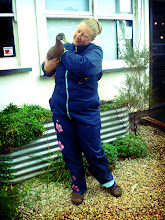
The story so far

Tamara left Bunyip in April 2009 seeking what she needed to know for her permaculture future. She spent 9 months at her Aunt Catherine's farm in Arid South Australia, then 9 months at Bill and Lisa Mollison's farm in Tasmania. Now she's off on more adventures starting Moonrise School of Permaculture and teaching Permaculture Design Courses in the beautiful Dandenong Ranges near Melbourne. Ducky is there for the journey...

Showing posts with label food. Show all posts

Thursday, March 27, 2014

Bunya Nuts - fabulous bush tucker!

Hi Folks!

An extra big welcome to the wonderful women I met at Seven Sisters Festival!

Like my Bunya Nut dish above? I boiled the Bunya nuts in salt water for 30 minutes then shelled them. I sauted them with butter, salt, pepper and dried oregano - and OMGODDESS were they amazing.

These ones were found near the Botanical Gardens in Melbourne. They are like giant pine nuts and were a traditional food of Aboriginal people in QLD. I recommend you find your local ones and watch them like a hawk every february :)

Its acorn season now - English oaks are dropping acorns across Melbourne and Victoria, they are generally pretty good eating - see previous posts for cooking instructions.

Chestnuts will be falling soon - keep an eye out! Pine Mushrooms should be starting now too! So much wild food!!!!!!!!!!!!!

While you're here, please - fill out my survey, it will take about 5 minutes. It will tell me what you want to learn, how and where you'll do it, and for what cost. Thanks in advance!

Survey is here! THANKS!!!
https://www.surveymonkey.com/s/K2QGCS8

Wednesday, February 19, 2014

Starting a permaculture school - the idea grows


Hi Everyone!

I had a fabulous time at the Sustainable Living Festival (SLF) at the weekend! I promoted Taj's and my upcoming Permaculture Design Course (PDC) and talked to loads of people about the school idea. The support for the school was very positive, with a bit of natural apprehension around it competing with other projects and teachers.

My aim is for "Cooperation not competition" (a David Holmgren permaculture principle) and I don't want the school to teach stuff other teachers have blazed the way for. We will have a PDC but that will be a continuation of the one Taj and I already teach.

Its still very early days yet, and as I said to many folk at SLF the structure and even name of the school is not known yet. I have many people to talk to about these things, and I've had some great ideas on these things already. What I am clear about is that the school will work next to other permaculture organisations rather than under them, I know myself very well and I do much better in a committee of one.

I had my NEIS induction on Monday and apart from getting drowsy during the language and maths literacy tests it went really well. I have a study buddy - my housemate Sarah - we got the train together to Box Hill encouraged each other during the day.

I have the distinct feeling that I'm not that comfortable being a learner anymore but I hope to get over that during the 6 week course! Good news is that I found some acorns under the Holm Oak street trees in Box hill. When I had a taste they were edible as is - no processing!!! I'll be going back there with a rake and some bags as more ripen!!!

The actual course of Cert III in Microbusiness management starts on Monday at the CAE in the city. That means an hour train ride to snooze or read and getting on at Belgrave means we will always get a seat!
We've already planned rejuvenating things like patting the horses that take people on cart rides from Swanston St and having our lunch next to the yarra, on the grass below the princess bridge. As long as we have some nature I think we'll be fine with the hustle and bustle of the city and indoor classes.

So - with the dates of the course I have to start the business within 13 weeks starting on Monday. About weeks 8 - 10 we hand in our business plan and get signed onto NEIS - which falls at the start of May. I was hoping it would be around then because International Permaculture Day is Sunday 4th May and my birthday is Thursday the 1st May. It is also just after new moon, a good time to start new endeavors.

I'm planning a series of workshops and celebratory meals over the May 1st weekend and have contacted some great teachers to get the ball rolling. I still need some women teachers, I want a 50/50 balance gender balance at all times. After that its a continuous banquet of workshops on a range of awesome topics like sawmilling and fencing, edible weeds and animal system design and care.

Dates to put in the diary!!! 

Thursday May 1st Launch day!!
Ultra-fast Composting 
workshop with Tamara Griffiths 
10:00 til 13:00 with optional post workshop visits to the compost for turning and observation
Upwey $50, Book with Tamara - Tamara@moonrisepermaculture.com.au

Friday May 2nd 
Dealing with slugs and snails Permaculture-style 
workshop with Tamara and Ducky
18:00 til 21:00 for practical slug and snail reduction techniques 
Upwey $50, Book with Tamara - Tamara@moonrisepermaculture.com.au

Saturday May 3rd - day off!

Sunday May 4th International Permaculture Day! 
Join us at Aaron Shipperlee's awesome portable GEODOME tent in Upwey for FREE activities and Upwey forest garden project planting and mulching from 9am til 2pm. Bring a plant or bale of straw! 
Permaculture Dinner at Magpie Cafe in the afternoon (TBA)


Autumn wildfoods workshop 
workshop with Taj aka The Permapixie - Belgrave $60 
For more info or to book with Taj - thepermapixie@gmail.com 


Here's a cut and paste document of the subjects I want to teach at the school. Are you someone who can teach these topics? Get in touch! Are you someone who would like to participate in these workshops? Get in touch!


Permaculture education facility – as yet unnamed
Tamara Griffiths

This year I am setting up a trust, school or institute based on the permaculture ethics:
Care of the earth, care of people, limit consumption and share the surplus. I am hoping to undertake a NEIS (New Enterprise Incentive Scheme) to get the organisation started. I am passionate about teaching as many people as possible about practical ways to change the world and have truly sustainable food and shelter while building soil and biodiversity.

It will be a place where people can learn about:
Permaculture - Permanent agriculture and Permanent culture
Practical ways to achieve food security in Australia and the world
Our beautiful earth and how to save her

We will run a program on 3 weeks on, one week off – this is part of the people care ethic, so workers and myself do not get burned out.

The School 

Courses
Courses are to start before land purchase and building at public and private sites and facilities. Many of these topics are covered in the Accredited Permaculture Training (APT) curriculum, particularly Cert IV, and I'd like people to be able to apply for Recognition of prior learning (RPL) if they wish to work towards certification.

·      These are all are paying courses with the offering of scholarships in each course.
·      Bringing the best people in Victoria, Australia and the world to teach these courses. 
·      I want to empower the new generation of permaculture teachers (like myself) to have a go, hone their skills and get their awesomeness out there! The school will be a place of encouragement and mentorship for all who want to start teaching.

Design
·      Permaculture principles and design methods
·      Patterns and permaculture design
·      Permaculture Design Course (72 hour internationally recognised course)
o   Taught 2 week intensively or also over months or a year
·      Introduction to Permaculture 2 day course
·      Introduction to Permaculture Design 2 day course
·      Design intensive course (post PDC) 20 hours, 50 hours, 100 hours
·      Edible Forest Gardening
·      Keyline Design
·      Regenerative agriculture
·      Coppice crop design, growing and use

Earth Activism
·      One or two week course
·      Permaculture design principles and methods
·      Introduction to front line environmental activism, activists and sites such as Toolangi State Forest

Permaculture Teacher Training
·      For PDCs
·      Teaching Permaculture creatively (Robin Clayfield)
·      Teaching permaculture to – adults, teenagers, kids
·      Teaching permaculture in a school kitchen garden

Practical permaculture skills - courses vary from 1 day to 3 weeks in length
Food
·      Food Growing
o   How to grow food – zone 1, zone 2, zone 3, seasonally
o   Forest Garden food growing
o   Foraging for wild food – seasonally
o   Acorns!
o   Edible weeds
o   Preserving the harvest – food processing, fermentation, nutrition
o   Large-scale food growing
o   Growing food in public places
o   Mushroom foraging
o   Mushroom culture
§  Shitake logs
§  Mushroom patches
§  Integrated mushroom and food
o   Broadscale murnong farming with kangaroo grass and traditional aboriginal techniques of fire and kangaroo management
·      Harvesting and storage
·      Food cooking and eating

Saving Biodiversity
·      Seed banks
·      Heritage fruits
·      Heritage vegetables
·      Rare breed animals
·      Endangered species in natural systems

Structures
·      Structures and building techniques for a sustainable future
·      Super adobe - earthbag building construction – Cal Earth instructors
·      Sustainable cooling and heating – home design
·      Energy and the home
·      Appropriate technology
·      Storage
·      Kachel ovens and Kang beds

Hard core rural permaculture skills!
·      Sawmilling using a portable mill
·      Fencing for small and large scale properties
·      Land survey and landscape mapping for rural properties
·      Keyline and earthworks
·      Large scale earthworks – swales, dam building, gabions, checkdams
·      Large scale Composting
·      Jean Paine hot water and methane
·      Regenerative Agriculture

Reclaiming traditional skills
·      Basket making and practical home skills
·      Scything
·      Blacksmithing
·      Herbal wisdom

Soil
·      Composting
·      1 week soil course
·      2 week soil course

Water
·      Water cycle, rainfall variation planning for disaster
·      Permaculture systems for water

Understanding natural systems and Ecology
·      Nature awareness
·      Water and waterways
·      Forests
·      Seashores
·      Bioregions, EVCs and native species
·      Landscape
·      ecosystem knowledge
·      Indigenous plants and how to use them
·      Fungi
·      Fossils

Social permaculture
·      How to start community projects
·      How to start a community group
·      How to start a permaculture business
·      How to start a community or eco village

Aid work
·      Introduction to aid work
·      2 – 3 week aid work course

Aboriginal Australia
"Close the Gap" between Aboriginal and average Australian lifespan
·      Indigenous food knowledge 
·      Remote community food security and sustainable habitation

Climate strategies
·      Temperate permaculture design and strategies
·      Tropical permaculture design and strategies
·      Arid permaculture design and strategies

Animal systems and practice
·      Polyface farming theory and practice
·      Milking goats design and care
·      Pig design and care
·      Chooks design and care
·      Ducks design and care
·      Geese design and care
·      Sheep design and care
·      Dairy cow design and care
·      Beef cow design and care

Tree systems - more to come

Research and reporting - more to come

Internships  
·      Coursework and practical experience with educators and supervisors present at all times, based around APT Cert IV subjects, which are practical and done in such a way that the candidate can apply for RPL.

Thursday, October 3, 2013

The politics of weeds as a food - and a recipe!


The politics of weeds as a food

Its spring and all the weeds are coming up. Awesome! Time to make some salad!!! I have some theories on herbs and edible weeds. The first is that many of these plants have been part of the human landscape for thousands, even millions of years. It’s no accident that Dandelion, one of the most nutritious plants in the world is found in temperate climates all over the globe. 

It's there because we have been eating it forever, we took it there. Where we call it a weed, it has fallen victim to poison companies and people who have been convinced by Monsanto, Bayer and the like that lawns should be a monoculture, that they should have no food value whatsoever and that we need to poison the hell out of anything other than grass. This is important – if we have food volounteering in our lawns we are less likely to buy vegetable and grain seed and food produced by these same companies.  God forbid we have any say over what we eat, and any food democracy at all.

When we eat a dandelion leaf, we aren’t just getting Vitamin A, B, C, D, fibre, protein, iron, calcium, magnesium, potassium, phosphorus, copper, cobalt, zinc, boron, molybdenum, we are telling multinational corporations to shove their poison and GMO seed where the sun don’t shine.  We are also saying a big up yours to companies like McDonalds who would squash our food independence in the name of money making and deliberate homogenization.

I’m a permaculture designer – one of our principles of design is this:
The problem is the solution.
Where someone else sees a problem and wants to kill it, have a think about how that plant could be utilized. Find out what ecological niche and function it fills and exploit it. Use it for food, or firewood, or basketry, or medicine, or animal forage, or to advance succession.  Once we have figured out how to use it, it is no longer a weed, but an ally. But now, on to the food…

Getting started with eating herbs and weeds can be challenging as many of us haven’t worked with their flavours before. Making a green dressing for your salad, boiled potatoes or meat is a great way to get extra nutrition as well as awesome flavour. I’ve put the ingredients below in ratios to help you make a delicious mix. The trick is to use as many different herbs and weeds as possible, chopped very finely, so that there is no one overpowering flavour. I’ve put down the plants I have tasted and like. There are lots more out there – get researching and foraging! Get your plant ID correct so you don’t get nasty surprises like eating broad leaf plantain instead of narrow leaf plantain – or too much dock - it aint fun, trust me.

And remember – every delicious bite is a political act of independence!


Green Salad Dressing
You can chop any of the ingredients finely and hand mix or use a blender to get a pesto-like consistency with garlic and olive oil.
Add lemon or lime juice to balance the flavour. You can also use good vinegar and a teaspoon of mustard. Then add salt and pepper to taste. Try adding some nuts or capers for extra body.
Be creative and remember to taste as you go and before you season. 

Choose some of these ingredients:

Handful
parsley, broad bean tips, kale, oregano or marjoram, young silverbeet, young rainbow chard, beetroot leaves, basil, coriander, watercress, sprouts, mint, clover leaves, chickweed, mallow, thin leafed plantain (small leaves)

Half handful
sage, thyme, raw sorrel, spring onions, chives or garlic chives, rosemary, chervil, tarragon, borage, lemon balm, nasturtium leaves, mustard leaves, dill, fennel, young dandelion leaves (before flowering), violet leaves, catsear, small fat hen leaves,  purslane, onion weed (allium triquetrum)

Handful blanched
warrigal greens, spinach, silverbeet leaves, nettle leaves and stems, sorrel, amaranth, large fat hen leaves, blanched canna lily (new shoots peeled to green centre)

Pull apart
edible flowers for garnish, Dandelion, Borage, Nasturtium, Calendula, Bergamot, Clover, Rocket, Allium, Pineapple sage, any Brassica flowers

Other weeds I've eaten:

Prickly pear - use caution when harvesting... TRUST ME!!!

Wednesday, June 12, 2013

Fruit trees in temperate Edible Forest Gardens


The temperate Edible Forest Garden (EFG) movement began in the UK with Robert Hart. Even though some think he made ‘every mistake in the book’ it still fed him and his brother with leftovers for locals over many years. A forest garden is such a highly productive system that even first attempts at the idea created an abundance of food. Robert wrote several books on forest gardening as well as ecology. His best known work is "Forest Gardening". 

Patrick Whitefield built on Hart’s idea and his book “How to make a Forest Garden” was one of my first permaculture books. It inspired me to turn three plum trees with grass under them into a forest garden that I ate out of daily. 

When I came across Dave Jacke’s double volumed "Edible Forest Gardens" (with Eric Toensmeier) I was overwhelmed by the sheer amount of information and dipped in and out of them until I did Dave's course recently at Milkwood Permaculture. Over many years of design and implementation of edible forest gardens, with the largest project to date at Wellesley College in Massechusetts, the tomes have much to share. His course re-introduced me to the appendices at the back of volume 2 – with many tables on plant use, how they work in forest garden guilds, and a huge amount of useful information for people growing fruit trees.

Also of use for fruit tree growers are two ways Dave uses guilds – the ‘resource partitioning guild’ and the ‘mutual support guild’. EFGs are a mimic of a forest. As permaculturists we recognise that forests have at least three vegetation layers above the ground. These layers partition the light coming into the system. Fruit trees are often the overstory in a mixed orchard, but they can be a middle story growing near to but not under other larger food trees like oaks and chestnuts, for example in a ‘forest edge’ type pattern. 

In EFGs we must also be aware that a resource partitioning guild also takes the underground economy into account, with soil moisture and nutrients also being shared with other plants. When we look at fruit trees in our systems we must look at their root structure and tolerances as well as their above ground habits. This tells us the best way to work with the physical structures when choosing the plants in our EFG and how we work with succession.

When we create guilds around our heavily cropping fruit trees it is also important to create a mutual support guild. What plants and animals aid our fruit trees varies with each species, root stock and cultivar and requires a detailed needs analysis for each variation. The pear is an example that Dave Jacke uses; European Pears need calcium, and growing an understory of comfrey that bio-accumulates calcium is a good pairing for around its roots. This guild with more suitable plants can be seen above, from the cover of Dave Jacke’s Edible forest garden books. A full size pic is at Milkwood’s blog: http://milkwood.net/2011/11/18/gardening-like-a-forest-podcast-with-dave-jacke/

In our mutual support guilds we can also create year round nectar availability for bees and specialist feeders like hoverflies and give these important pollinators and predator species habitat and fodder and increase our fruit tree yields. Plants like yarrow with many functions as a nectarary, dynamic accumulator and living much plant are excellent additions to forest gardens.

The Wellesley EFG project can be found here:

This article was originally written for the Permaculture Melbourne Newsletter - "Permaculture Information Exchange" or "PIE". This edition has pages of excellent info on fruit trees - you can join Permaculture Melbourne for access to this amazing resource. There is so much more for me to write on my learning from Dave Jacke - but I do recommend people get the books I've mentioned above and give forest gardening a go. And let me know how you're going or if you need some advice!

I have lots of pics of my forest gardens at http://www.flickr.com/photos/boodicusducky/sets/72157625608069701/
and implementation of the Heritage fruit orchard/forest garden at

Tuesday, June 4, 2013

A Permaculture Winter in Belgrave - with Ducks!

Its hard to believe that my last post was written in January!! What a slack blogger I have been. But I haven't been doing nothing - Taj and I have been teaching two Permaculture Design Certificates (the 72 hour internationally recognised course abbreviated to PDC), I've been back in the Stephanie Alexander Kitchen Garden at the Aspendale Gardens Primary School and I've studied hard at the Edible Forest Garden with Dave Jacke course at Milkwood Permaculture!

Its winter and in true permaculture style I am sitting outdoors at my little coffee table enjoying the cloudy daylight. The ducks - yes ducks as in plural - Ducky has some new friends - two lady ducks called Boodicca and Drusticc - have just found the lush grass around the grey water outlet for the house - which needs some designing done to clean and reuse it. We are thinking maybe bathtubs with reed beds leading to a duck/prawn growing system near the water tank green house... none of which exist at this stage, but as ideas we are enjoying the thoughts!

The ducks have just started to lay eggs, this morning I got eggs 7 and 8 and so far they've all gone to the house upstairs - my permaculture community that lives 2 minutes away from my nice private little studio. I have a view of the acre or so of the land we have here. It is glorious to see Ducky and two white pekins in the lush green landscape searching for goodies; very picturesque with the Crimson Rosella adults and juveniles nibbling seed on the swale.

Where to start! The previous post is about starting the Wednesday night PDC and advertising the upcoming saturday PDC. Well the saturday course finished last weekend with some brilliant permaculture designs presented by the four awesome graduates. We were super impressed with the designs, and astonished at the level of effort and research that had gone into them. Where people had done patch designs, they had taken the forest garden technique of resource partitioning guilds and had researched not only the needs of fruit, vegies and vines, but also their root structures so sun and soil space was shared. I could have been knocked over with a feather!!!

It was a little sad to say goodbye to the class; over the last few months we've spent many days together learning and designing but it felt awesome to unleash some more permies on an unsuspecting world. The PDC is supposed to be transformational and I am pretty sure this one was. For Taj and myself as well. This was Taj's first PDC and only my fourth so it was a huge achievement for both of us. Taj is also the queen of admin, organisation and class resources - you can see some of her notes and at her blog: http://thepermapixie.blogspot.com.au/

What else is happening? The Wednesday night class from my last blog has been going for nearly 6 months and many evenings and dinners have been shared. There comes a point in a course where people have gotten to know each other and it becomes a night out with friends as well as a learning experience. The communal meals each week have been part of that - sharing food that you have made with people creates bonds that you just don't get in situations without food. Food is a fundamental part of our culture as humans, we've been sharing food and fire for millennia. This class finishes in the next few weeks and the permaculture family we've built will stop meeting weekly - hopefully people will visit me at Permaculture Breakfast at Magpie Cafe in Upwey. Some of the students are refusing to stop coming... they may be helping with the next course and possibly teaching on it, so we'll see.

And now to tell you about the next PDC course! It starts on Wednesday July 10 and runs for 6 months. We are starting at almost mid-winter and will travel with the sun as spring and summer return. Here is the write up:


July 10 2013 Permaculture Design Certificate
Join The Perma Pixie and Tamara Griffiths this winter as we snuggle up next to the combustion stove with tea constantly brewing and share our knowledge and experience about the wonderful world of Permaculture!
The course will run through spring and into summer, when we will start to put our winter lessons into practice and get our hands dirty!
Permaculture was what lead us to believe we can make a positive change in our world, helping to heal the environment, bring ecology back to a healthy equilibrium and give ourselves an inherent sense of well-being through this work. We hope others will find the same sense of connection to their surrounds and empowerment within themselves through our courses. 


A full 72 hr PDC which aims to empower and inspire students to continue their lives with a sustainable and conscious outlook.
Topics covered include:
- Permaculture Principles and Ethics
- Ecology
- Patterns in Nature
- Methods of Design
- Water
- Soils
- Animal Systems
- Community and Social Permaculture
- Forests and Plants
- Wild Foods and Herbal Medicine skillday
- Food Forests

The course is Wednesday evenings for 3 hrs from 6:00pm - 9:30pm, and runs for the duration of 6 months. This is to accommodate for peoples busy lives and ensure that we keep warm by the heat of the combustion stove for the winter evenings while we learn some theory, before stepping out and getting our hands dirty in spring!

Cost: $700 waged, $500 concession
Payment plans available - talk to us

Join Tamara Griffiths and Taj Scicluna (The Perma Pixie) as we continue our journey to revolutionize the world through Permaculture.
For more info check my website:www.thepermapixie.com
For bookings: thepermapixe@gmail.com 
More info from me: Tamara@moonrisepermaculture.com.au


Tamara and Taj at the recent PDC excursion!

Monday, April 2, 2012

Making a right livelihood in Permaculture! My first PDC with paying students!!

May 5 Upwey Permaculture Design Course
with Tamara and Ducky

I am so excited - and slightly afraid - I am running my first PDC with paying students!! 
It is starting May 5 - just before National Permaculture Day!

I finished my Upwey Tuesday Free PDC class last week. Here is our graduation day pic!


To qualify for graduation the students had to do two designs, one of an urban property and one of a village or community. The designs of presented on this final day were absolutely amazing.

I was so proud, and graduated nine terminal permies!!! 

I had so much help and inspiration from Taj Permapixie, Delvin Solkinson, Ali Ma, Robin Clayfield, Rosemary Morrow, Pete the Permie and Silvia Allen, Michelle Jones, Pepo Dib, Ed Adamthwaite and my friends in the Ultra Local Upwey Permaculture Group. Thank you so much! 

My students were incredibly supportive as well. The food they brought was wonderful! They were very good humored about my creative teaching methods and fell in love with Ducky (of course), bringing him worms and snails for snacks.  

Thanks to Lucy, Rob, Mary, Liz, Larry, Sarah, Brooke, Asha and Faye. What a great time I had!

I did Ducky and I a certificate - to remember the day :) Mum took this one for me Tuesday evening :)

Here are the details of the upcoming course! Hooray! 
Please share with your friends - help all of us earn a right livelihood in Permaculture Education!

Permaculture Design Certificate Course ~ PDC
with Tamara Griffiths and Ducky

and Melbourne’s new generation of permaculture teachers, all of which are being paid: 

Taj Permapixie (last semester of APT diploma of Permaculture), 
Pepo Dib, (Permaculture Mexico)
Mys Tee (The California Institute of Earth Art and Architecture - Cal-Earth),
Michelle Jones (Transition Sherbrooke, Friends of Upwey Tecoma Community Orchard and more), 
Sarah Gorman (Sustainability Victoria, and fellow Planetary Permaculture Pilgrim), 
Seila Hierk (Stephanie Alexander Kitchen Garden Program), 
Angelo Eliades (Forest Garden creator, permaculture educator and author), 
more guests will be announced soon…

Starts May 5
running over 12 saturdays at permaculture places around Melbourne

Cost
$400 concession
$600 waged
Couples - second person - friend, family or partner gets place for half price.  
I am committed to making permaculture sustainable for couples.  

The PDC is an internationally recognized, 72 hour course resulting in a Permaculture Design Certificate.

Moonrise Permaculture ~ Tamara Griffiths
Tamara@moonrisepermaculture.com.au
0407 45 7707