The story so far

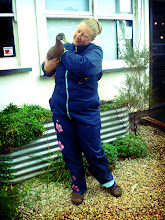
Tamara left Bunyip in April 2009 seeking what she needed to know for her permaculture future. She spent 9 months at her Aunt Catherine's farm in Arid South Australia, then 9 months at Bill and Lisa Mollison's farm in Tasmania. Now she's off on more adventures starting Moonrise School of Permaculture and teaching Permaculture Design Courses in the beautiful Dandenong Ranges near Melbourne. Ducky is there for the journey...

Showing posts with label foraging. Show all posts

Thursday, April 10, 2014

Moonrise School of Permaculture launch weekend workshops updated


Here is an early version of the Moonrise School of Permaculture logo! What do you think?? 
Image by Fyona Mitaxa Design by Vee Hildebrand


Moonrise School of Permaculture launch weekend May 1 – 4  2014

Thursday May 1st Launch day!!

Ultra-fast Composting
Practical workshop with Tamara Griffiths
10:00 til 14:00 with optional post workshop visits to the compost for turning and observation
Upwey $50, Book with Tamara - Tamara@moonrisepermaculture.com.au

Friday May 2nd

Dealing with slugs and snails Permaculture-style
Practical workshop with Tamara Griffiths and Ducky
18:00 til 21:00 for practical slug and snail reduction techniques
Upwey $50, Book with Tamara - Tamara@moonrisepermaculture.com.au

Saturday May 3rd - much needed rest day!

Sunday May 4th International Permaculture Day!

Join us at Aaron Shipperlee's awesome portable GEODOME tent in Upwey for FREE activities Upwey forest garden project planting and mulching from
12:00 til 14:00 - bring a plant or bale of straw for the garden

Permaculture Breakfast at Magpie Café 10:00 onwards
International Permaculture Day Dinner
Magpie Cafe in the afternoon 14:30
$20 adults, $15 children, book at Magpie Cafe


Please - tell me what you want to learn at the new school!
Survey is here! THANKS!!!


Find Moonrise School of Permaculture on Twitter: @TamaraMSOP
Find Moonrise School of Permaculture on Facebook: https://www.facebook.com/MoonrisePermaculture?ref=hl
Find Tamara of Facebook: https://www.facebook.com/tamara.griffiths
https://www.surveymonkey.com/s/K2QGC

Thursday, March 27, 2014

Bunya Nuts - fabulous bush tucker!

Hi Folks!

An extra big welcome to the wonderful women I met at Seven Sisters Festival!

Like my Bunya Nut dish above? I boiled the Bunya nuts in salt water for 30 minutes then shelled them. I sauted them with butter, salt, pepper and dried oregano - and OMGODDESS were they amazing.

These ones were found near the Botanical Gardens in Melbourne. They are like giant pine nuts and were a traditional food of Aboriginal people in QLD. I recommend you find your local ones and watch them like a hawk every february :)

Its acorn season now - English oaks are dropping acorns across Melbourne and Victoria, they are generally pretty good eating - see previous posts for cooking instructions.

Chestnuts will be falling soon - keep an eye out! Pine Mushrooms should be starting now too! So much wild food!!!!!!!!!!!!!

While you're here, please - fill out my survey, it will take about 5 minutes. It will tell me what you want to learn, how and where you'll do it, and for what cost. Thanks in advance!

Survey is here! THANKS!!!
https://www.surveymonkey.com/s/K2QGCS8

Wednesday, February 19, 2014

Starting a permaculture school - the idea grows


Hi Everyone!

I had a fabulous time at the Sustainable Living Festival (SLF) at the weekend! I promoted Taj's and my upcoming Permaculture Design Course (PDC) and talked to loads of people about the school idea. The support for the school was very positive, with a bit of natural apprehension around it competing with other projects and teachers.

My aim is for "Cooperation not competition" (a David Holmgren permaculture principle) and I don't want the school to teach stuff other teachers have blazed the way for. We will have a PDC but that will be a continuation of the one Taj and I already teach.

Its still very early days yet, and as I said to many folk at SLF the structure and even name of the school is not known yet. I have many people to talk to about these things, and I've had some great ideas on these things already. What I am clear about is that the school will work next to other permaculture organisations rather than under them, I know myself very well and I do much better in a committee of one.

I had my NEIS induction on Monday and apart from getting drowsy during the language and maths literacy tests it went really well. I have a study buddy - my housemate Sarah - we got the train together to Box Hill encouraged each other during the day.

I have the distinct feeling that I'm not that comfortable being a learner anymore but I hope to get over that during the 6 week course! Good news is that I found some acorns under the Holm Oak street trees in Box hill. When I had a taste they were edible as is - no processing!!! I'll be going back there with a rake and some bags as more ripen!!!

The actual course of Cert III in Microbusiness management starts on Monday at the CAE in the city. That means an hour train ride to snooze or read and getting on at Belgrave means we will always get a seat!
We've already planned rejuvenating things like patting the horses that take people on cart rides from Swanston St and having our lunch next to the yarra, on the grass below the princess bridge. As long as we have some nature I think we'll be fine with the hustle and bustle of the city and indoor classes.

So - with the dates of the course I have to start the business within 13 weeks starting on Monday. About weeks 8 - 10 we hand in our business plan and get signed onto NEIS - which falls at the start of May. I was hoping it would be around then because International Permaculture Day is Sunday 4th May and my birthday is Thursday the 1st May. It is also just after new moon, a good time to start new endeavors.

I'm planning a series of workshops and celebratory meals over the May 1st weekend and have contacted some great teachers to get the ball rolling. I still need some women teachers, I want a 50/50 balance gender balance at all times. After that its a continuous banquet of workshops on a range of awesome topics like sawmilling and fencing, edible weeds and animal system design and care.

Dates to put in the diary!!! 

Thursday May 1st Launch day!!
Ultra-fast Composting 
workshop with Tamara Griffiths 
10:00 til 13:00 with optional post workshop visits to the compost for turning and observation
Upwey $50, Book with Tamara - Tamara@moonrisepermaculture.com.au

Friday May 2nd 
Dealing with slugs and snails Permaculture-style 
workshop with Tamara and Ducky
18:00 til 21:00 for practical slug and snail reduction techniques 
Upwey $50, Book with Tamara - Tamara@moonrisepermaculture.com.au

Saturday May 3rd - day off!

Sunday May 4th International Permaculture Day! 
Join us at Aaron Shipperlee's awesome portable GEODOME tent in Upwey for FREE activities and Upwey forest garden project planting and mulching from 9am til 2pm. Bring a plant or bale of straw! 
Permaculture Dinner at Magpie Cafe in the afternoon (TBA)


Autumn wildfoods workshop 
workshop with Taj aka The Permapixie - Belgrave $60 
For more info or to book with Taj - thepermapixie@gmail.com 


Here's a cut and paste document of the subjects I want to teach at the school. Are you someone who can teach these topics? Get in touch! Are you someone who would like to participate in these workshops? Get in touch!


Permaculture education facility – as yet unnamed
Tamara Griffiths

This year I am setting up a trust, school or institute based on the permaculture ethics:
Care of the earth, care of people, limit consumption and share the surplus. I am hoping to undertake a NEIS (New Enterprise Incentive Scheme) to get the organisation started. I am passionate about teaching as many people as possible about practical ways to change the world and have truly sustainable food and shelter while building soil and biodiversity.

It will be a place where people can learn about:
Permaculture - Permanent agriculture and Permanent culture
Practical ways to achieve food security in Australia and the world
Our beautiful earth and how to save her

We will run a program on 3 weeks on, one week off – this is part of the people care ethic, so workers and myself do not get burned out.

The School 

Courses
Courses are to start before land purchase and building at public and private sites and facilities. Many of these topics are covered in the Accredited Permaculture Training (APT) curriculum, particularly Cert IV, and I'd like people to be able to apply for Recognition of prior learning (RPL) if they wish to work towards certification.

·      These are all are paying courses with the offering of scholarships in each course.
·      Bringing the best people in Victoria, Australia and the world to teach these courses. 
·      I want to empower the new generation of permaculture teachers (like myself) to have a go, hone their skills and get their awesomeness out there! The school will be a place of encouragement and mentorship for all who want to start teaching.

Design
·      Permaculture principles and design methods
·      Patterns and permaculture design
·      Permaculture Design Course (72 hour internationally recognised course)
o   Taught 2 week intensively or also over months or a year
·      Introduction to Permaculture 2 day course
·      Introduction to Permaculture Design 2 day course
·      Design intensive course (post PDC) 20 hours, 50 hours, 100 hours
·      Edible Forest Gardening
·      Keyline Design
·      Regenerative agriculture
·      Coppice crop design, growing and use

Earth Activism
·      One or two week course
·      Permaculture design principles and methods
·      Introduction to front line environmental activism, activists and sites such as Toolangi State Forest

Permaculture Teacher Training
·      For PDCs
·      Teaching Permaculture creatively (Robin Clayfield)
·      Teaching permaculture to – adults, teenagers, kids
·      Teaching permaculture in a school kitchen garden

Practical permaculture skills - courses vary from 1 day to 3 weeks in length
Food
·      Food Growing
o   How to grow food – zone 1, zone 2, zone 3, seasonally
o   Forest Garden food growing
o   Foraging for wild food – seasonally
o   Acorns!
o   Edible weeds
o   Preserving the harvest – food processing, fermentation, nutrition
o   Large-scale food growing
o   Growing food in public places
o   Mushroom foraging
o   Mushroom culture
§  Shitake logs
§  Mushroom patches
§  Integrated mushroom and food
o   Broadscale murnong farming with kangaroo grass and traditional aboriginal techniques of fire and kangaroo management
·      Harvesting and storage
·      Food cooking and eating

Saving Biodiversity
·      Seed banks
·      Heritage fruits
·      Heritage vegetables
·      Rare breed animals
·      Endangered species in natural systems

Structures
·      Structures and building techniques for a sustainable future
·      Super adobe - earthbag building construction – Cal Earth instructors
·      Sustainable cooling and heating – home design
·      Energy and the home
·      Appropriate technology
·      Storage
·      Kachel ovens and Kang beds

Hard core rural permaculture skills!
·      Sawmilling using a portable mill
·      Fencing for small and large scale properties
·      Land survey and landscape mapping for rural properties
·      Keyline and earthworks
·      Large scale earthworks – swales, dam building, gabions, checkdams
·      Large scale Composting
·      Jean Paine hot water and methane
·      Regenerative Agriculture

Reclaiming traditional skills
·      Basket making and practical home skills
·      Scything
·      Blacksmithing
·      Herbal wisdom

Soil
·      Composting
·      1 week soil course
·      2 week soil course

Water
·      Water cycle, rainfall variation planning for disaster
·      Permaculture systems for water

Understanding natural systems and Ecology
·      Nature awareness
·      Water and waterways
·      Forests
·      Seashores
·      Bioregions, EVCs and native species
·      Landscape
·      ecosystem knowledge
·      Indigenous plants and how to use them
·      Fungi
·      Fossils

Social permaculture
·      How to start community projects
·      How to start a community group
·      How to start a permaculture business
·      How to start a community or eco village

Aid work
·      Introduction to aid work
·      2 – 3 week aid work course

Aboriginal Australia
"Close the Gap" between Aboriginal and average Australian lifespan
·      Indigenous food knowledge 
·      Remote community food security and sustainable habitation

Climate strategies
·      Temperate permaculture design and strategies
·      Tropical permaculture design and strategies
·      Arid permaculture design and strategies

Animal systems and practice
·      Polyface farming theory and practice
·      Milking goats design and care
·      Pig design and care
·      Chooks design and care
·      Ducks design and care
·      Geese design and care
·      Sheep design and care
·      Dairy cow design and care
·      Beef cow design and care

Tree systems - more to come

Research and reporting - more to come

Internships  
·      Coursework and practical experience with educators and supervisors present at all times, based around APT Cert IV subjects, which are practical and done in such a way that the candidate can apply for RPL.

Thursday, October 3, 2013

The politics of weeds as a food - and a recipe!


The politics of weeds as a food

Its spring and all the weeds are coming up. Awesome! Time to make some salad!!! I have some theories on herbs and edible weeds. The first is that many of these plants have been part of the human landscape for thousands, even millions of years. It’s no accident that Dandelion, one of the most nutritious plants in the world is found in temperate climates all over the globe. 

It's there because we have been eating it forever, we took it there. Where we call it a weed, it has fallen victim to poison companies and people who have been convinced by Monsanto, Bayer and the like that lawns should be a monoculture, that they should have no food value whatsoever and that we need to poison the hell out of anything other than grass. This is important – if we have food volounteering in our lawns we are less likely to buy vegetable and grain seed and food produced by these same companies.  God forbid we have any say over what we eat, and any food democracy at all.

When we eat a dandelion leaf, we aren’t just getting Vitamin A, B, C, D, fibre, protein, iron, calcium, magnesium, potassium, phosphorus, copper, cobalt, zinc, boron, molybdenum, we are telling multinational corporations to shove their poison and GMO seed where the sun don’t shine.  We are also saying a big up yours to companies like McDonalds who would squash our food independence in the name of money making and deliberate homogenization.

I’m a permaculture designer – one of our principles of design is this:
The problem is the solution.
Where someone else sees a problem and wants to kill it, have a think about how that plant could be utilized. Find out what ecological niche and function it fills and exploit it. Use it for food, or firewood, or basketry, or medicine, or animal forage, or to advance succession.  Once we have figured out how to use it, it is no longer a weed, but an ally. But now, on to the food…

Getting started with eating herbs and weeds can be challenging as many of us haven’t worked with their flavours before. Making a green dressing for your salad, boiled potatoes or meat is a great way to get extra nutrition as well as awesome flavour. I’ve put the ingredients below in ratios to help you make a delicious mix. The trick is to use as many different herbs and weeds as possible, chopped very finely, so that there is no one overpowering flavour. I’ve put down the plants I have tasted and like. There are lots more out there – get researching and foraging! Get your plant ID correct so you don’t get nasty surprises like eating broad leaf plantain instead of narrow leaf plantain – or too much dock - it aint fun, trust me.

And remember – every delicious bite is a political act of independence!


Green Salad Dressing
You can chop any of the ingredients finely and hand mix or use a blender to get a pesto-like consistency with garlic and olive oil.
Add lemon or lime juice to balance the flavour. You can also use good vinegar and a teaspoon of mustard. Then add salt and pepper to taste. Try adding some nuts or capers for extra body.
Be creative and remember to taste as you go and before you season. 

Choose some of these ingredients:

Handful
parsley, broad bean tips, kale, oregano or marjoram, young silverbeet, young rainbow chard, beetroot leaves, basil, coriander, watercress, sprouts, mint, clover leaves, chickweed, mallow, thin leafed plantain (small leaves)

Half handful
sage, thyme, raw sorrel, spring onions, chives or garlic chives, rosemary, chervil, tarragon, borage, lemon balm, nasturtium leaves, mustard leaves, dill, fennel, young dandelion leaves (before flowering), violet leaves, catsear, small fat hen leaves,  purslane, onion weed (allium triquetrum)

Handful blanched
warrigal greens, spinach, silverbeet leaves, nettle leaves and stems, sorrel, amaranth, large fat hen leaves, blanched canna lily (new shoots peeled to green centre)

Pull apart
edible flowers for garnish, Dandelion, Borage, Nasturtium, Calendula, Bergamot, Clover, Rocket, Allium, Pineapple sage, any Brassica flowers

Other weeds I've eaten:

Prickly pear - use caution when harvesting... TRUST ME!!!

Wednesday, March 7, 2012

How to process acorns

Acorns are fantastic! They are full of nutrients, are a complete protein and are full of good fats (about 30%) and high in carbohydrates. They are also high in folate! They taste delicious once all the tannins have been removed (by leaching into water). And, for the most part - they are free if you live in a temperate climate! 
I started this post last year - at the start of my acorn journey:
Its early autumn here in Melbourne and the acorns are ripening and dropping off the oaks. I've wanted to try eating acorns for a few years now, but some oaks only have acorns every other year and that was the case last year in Tassie. Imagine my glee last week when I found a huge oak tree at Eltham College - where I was doing an awesome course with creative permie Robin Clayfield. I got some help to pick up a couple of kilos and promised acorn biscuits to the group. Unfortunately, acorns take alot of processing, particularly to get the tannins out. It took about 5 days for me to go from acorn to edible mush ready to cook with, too late for the course but not too late to try it out on my unsuspecting parents. Well actually they were suspecting, I've tried stuff out on them before.
How to process acorns
Acorns are delicious and good for you once the tannins are removed. 

Peeling raw: Tamara's method 1
if you use a nut cracker you can get into the peeling groove - I often do it while watching Dr Who or the like.
Then I grind up the 'nut' and wash in water. Drain through a tea towel in a colander. Wash with water a few times a day until the tannins are removed - the tartness disappears. Will have a grainy texture once dried.

Peeling raw then boil: Tamara's method 2
Peel the acorns in their raw state and remove any dodgy bits. Place the nuts into plenty of water and boil for 10 minutes. Lots of tannin should come out. Drain and boil again. Repeat until the tannins are gone and the nuts taste good.

Boiling method: Taj's method 1
If you boil them for 10 mins in plenty of water, drain and boil again for 10 mins the shells should come away more easily. Drain and discard all the shells. Continue to boil the acorns until all the tannin is gone. Can take many boils. Will be soft and silky when wet and smooth when dried.

This last week I used a method that is about halfway between Taj and my methods. It made the best bread ever. Probably the easiest of all the methods here :)

Boil, grind and rinse: Tamara's method 3
If you boil them for 10 mins in plenty of water, drain and boil again for 15 mins the shells should come away more easily. drain and Discard all the shells. Put the 'nuts' in a food processor and pulverise. then I drain them using a tea towel in a colander. Do this rinse as many times as it takes for the pulp to lose its tannins - that tartness. I do this outdoors near a tap and drain into buckets I use for watering. Mine normally takes about half a week if I'm washing them at least once a day :)

Dry or cook:
Once the tannin is removed you can dry the pulp in the sun or the oven, or use wet in a bread or pikelet straight away.
Acorn piklets -  beat an egg, acorn flour, maple syrup, baking powder and cook! Serve with maple syrup for a perennial tree based feast! Very Permaculture!

Link here to my youTube video making acorn bread, using flour from all of the above methods!

IMPORTANT NOTE: Do not pick the acorns from the tree. They are not ripe, they are bitter and won't open even when you boil them forever!!! These things we can learn only from getting out there and experimenting!!! Get to it people!!!!!

FINALLY: I found an acorn that requires no further rinsing once it is boiled and shelled! It turns out that eating an acorn from every oak tree I find IS a good way to find that pot of gold at the end of the acorn rainbow! Hooray!!!! Have a look at the huge oaks in St Ardauld next time you are up that way, the acorns are small but taste so good with almost no processing!!!

At the Upwey Food Swap - I got some very good swaps for my acorn bread and my acorn flour! 

Surprise fact 1 - if you put whole cracked acorns in half a bucket of water and let it sit for a while it will start to smell like antiseptic. This brew will get your hands super clean and even get slug slime off!

Surprise fact 2 - 300kg of acorns will give you 100kg of pork - an excellent food to meat ratio!